Schloss Hellbrunn
English

Salzburg, Austria

Four centuries of trick fountains, built to catch a prince's guests off guard

The 400-year-old water gardens a prince built to surprise his guests — booked to your chosen time so you walk straight in.

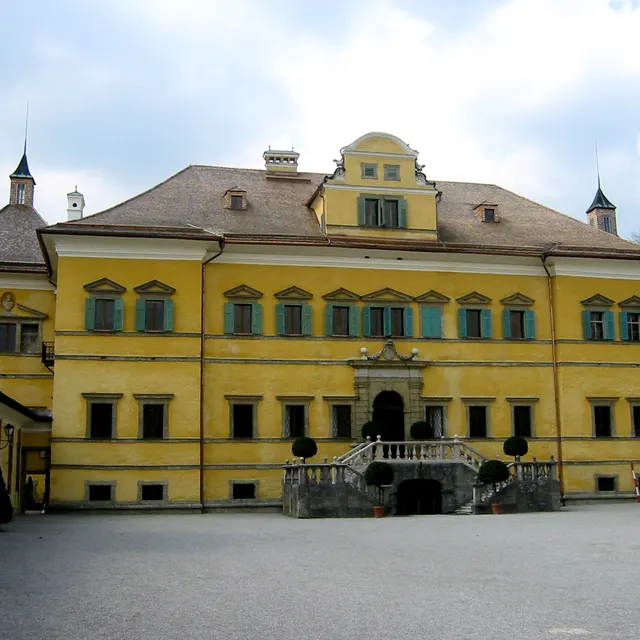
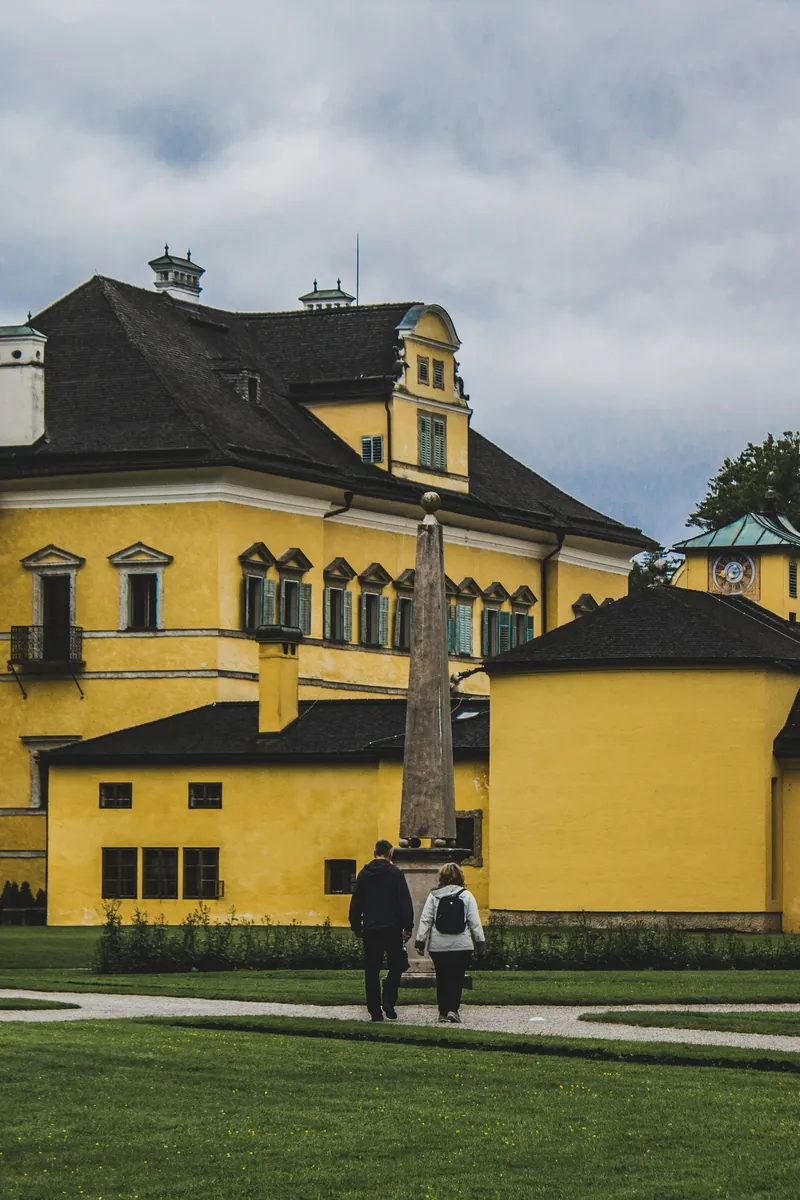
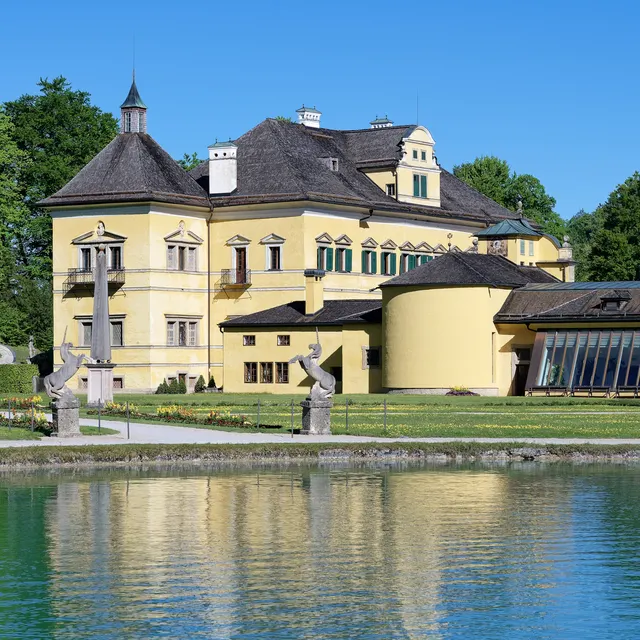
The ochre Baroque facade of Hellbrunn Palace near Salzburg, its green-shuttered windows and double staircase rising from the courtyard.
Choose your date & time From €14 · Pick your date and time at checkout
  • 1615Gardens first opened to surprise guests
  • 400+ yrsOriginal trick fountains still running
  • 14Audio-guide languages
  • ~2 hrsFountains, palace exhibition & folk museum
  • Tickets

    The mechanical theatre

    Every ticket covers the trick-fountain tour, the palace exhibition and the folklore museum. You choose the date and the time of your fountain tour at checkout, and the whole party goes in on one slot.

    Summer entry runs on timed slots and popular afternoons fill early — lock your time before you arrive.

    Choose your date and time at checkout

    Adult

    €29per ticket

    One adult — trick fountains, palace exhibition and folk museum, on your chosen timed slot

    • Timed-entry admission to the Hellbrunn Trick Fountains with mobile audio guide
    • The Palace Exhibition “GrandDelight” inside the pleasure villa
    • The Folklore Museum in the hilltop Monatsschlössl
    • Concierge booking of your exact date and time so you skip the ticket desk

    Child (4–18)

    €14per ticket

    One child aged 4 to 18 — same tour, same slot as the adults in your party

    • Timed-entry admission for one child aged 4–18, with mobile audio guide
    • The trick fountains, palace exhibition and folklore museum
    • Booked to the same slot as your adult tickets

    Family ticket

    €62per ticket

    Two adults and one child on one ticket — add extra children at checkout

    One ticket for two adults and one child. Extra children are added at checkout, not here.

    • Timed-entry admission for two adults and one child (aged 4–18)
    • All three experiences: trick fountains, palace exhibition, folklore museum
    • Extra children can be added when you check out
    • The whole party booked onto one time slot

    Children under 4 enter free and need no ticket. Season: late March to 1 November. Fountain tours from 09:30; last admission about 16:30 in spring and autumn, about 18:00 in July and August.

    Booked in the language you speakYour currency and the final price, no German-only form
    Insider tips come with itThe quietest grottoes, where the jets hide, when the afternoons fill
    Landing in your inbox before departureMobile ticket for your time slot, nothing to collect at the gate
    Real people, day and nightConcierge support in your language, right through your visit

    The place

    A palace with no bedrooms

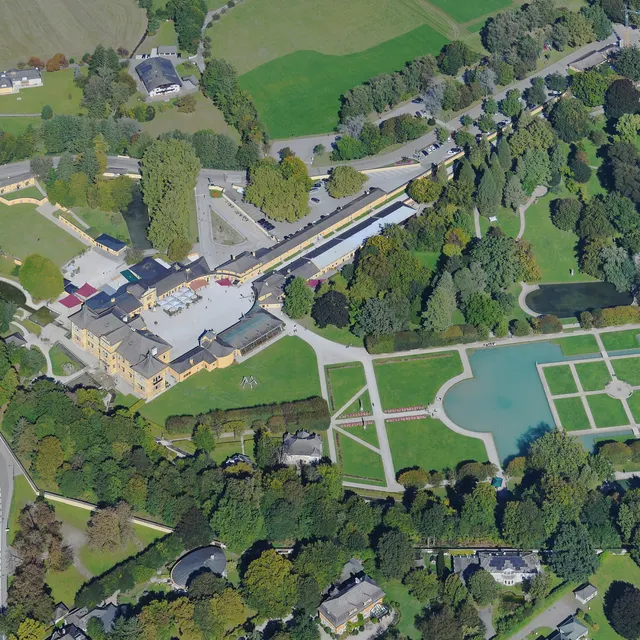
    Schloss Hellbrunn reflected in the pond in front of the palace

    Built for pleasure

    Hellbrunn was never meant to be slept in. When Prince-Archbishop Markus Sittikus von Hohenems built it on the southern edge of Salzburg in the 1610s, he built a villa for daytime pleasure — banquets, music, and above all mischief. There isn't a single bedroom in the whole palace.

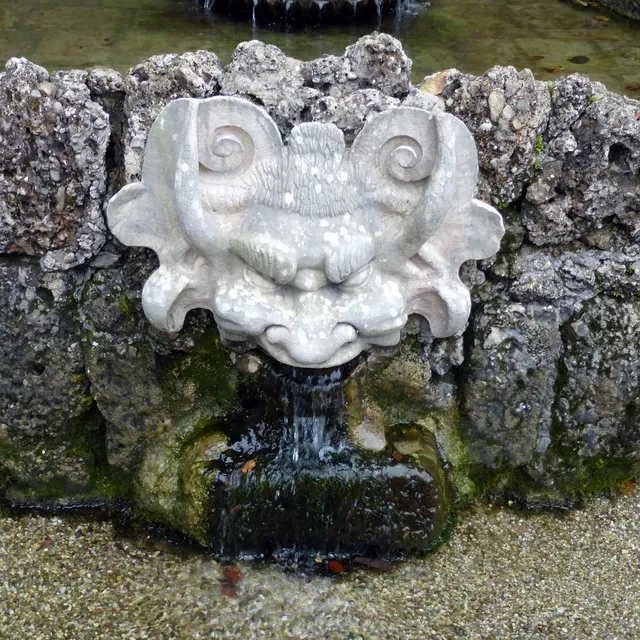
    The Germaul, the water-driven face that rolls its eyes and pokes out its tongue

    The mischief

    The mischief is the trick fountains. Hidden jets spring from the stone benches, the grottoes and the garden paths, soaking guests exactly where they least expect it — the same practical jokes the prince played on his dinner guests four centuries ago, still worked by the original water pressure and still catching everyone out today.

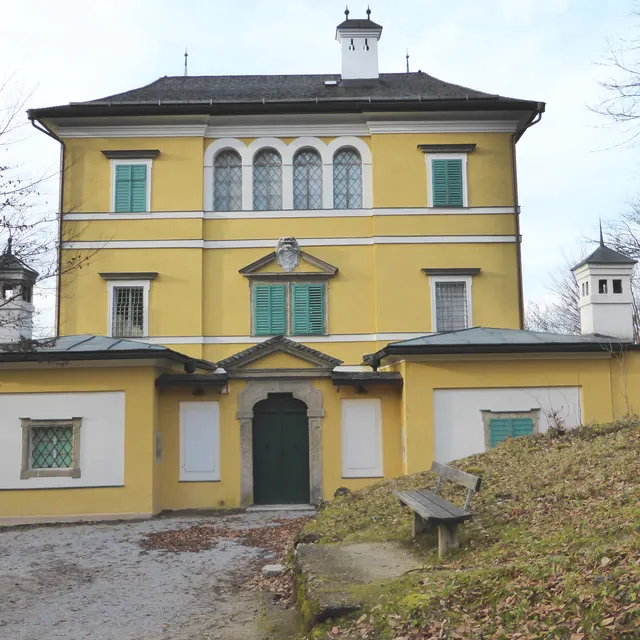
    The Monatsschlössl pavilion on the hill above Hellbrunn

    Beyond the water

    Beyond the water games there is the pleasure palace itself with its “GrandDelight” exhibition, the folklore museum in the little hilltop Monatsschlössl, and the wide free gardens where the glass gazebo from The Sound of Music now stands. We handle the one thing that trips visitors up — getting a timed ticket for the day and hour you actually want — so you can just turn up and enjoy the surprise.

    Along the tour

    Seven grottoes and a stage

    Visitors caught by the hidden jets of the Hellbrunn trick fountains
    The jets find their guests
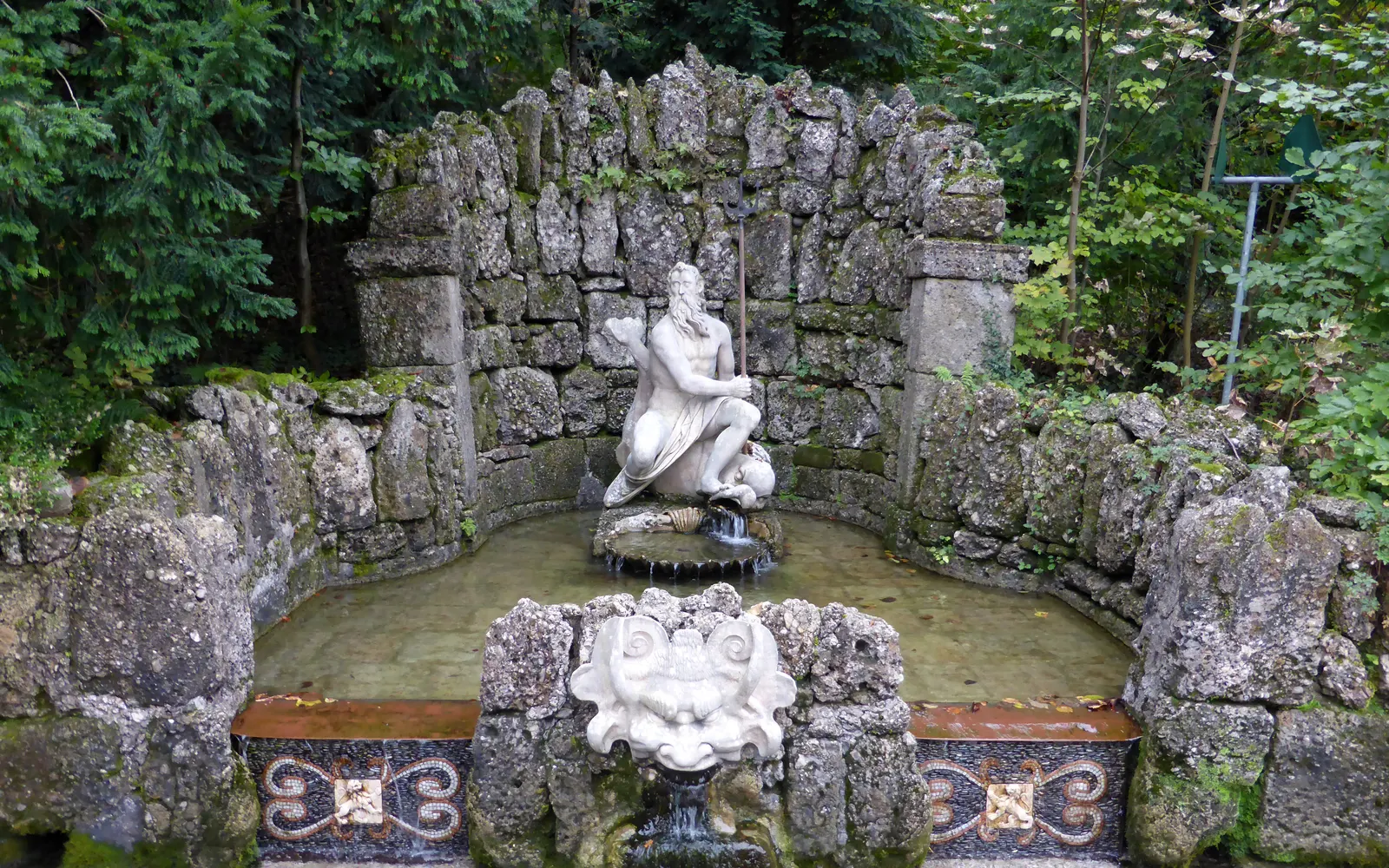
    The Neptune Grotto at Hellbrunn with its rock walls and statue
    The Neptune Grotto
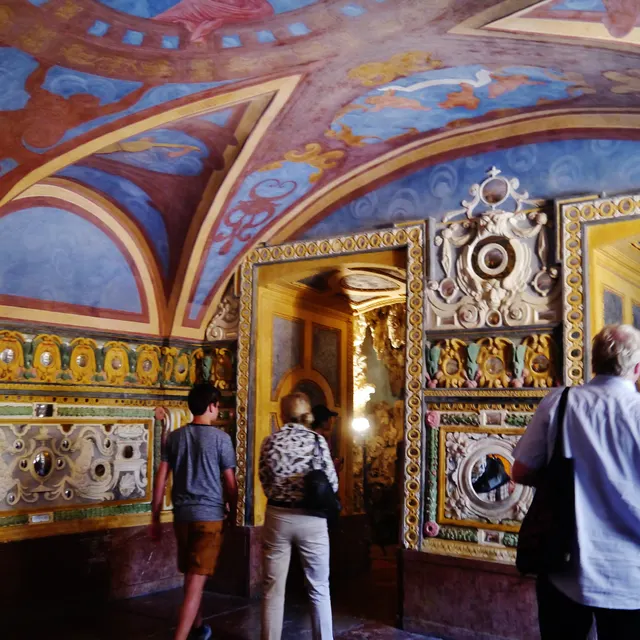
    Painted vaulted grotto on the Hellbrunn fountain tour with visitors
    Inside a painted grotto
    The pink-niched Roman Theatre grotto at Hellbrunn
    The Roman Theatre
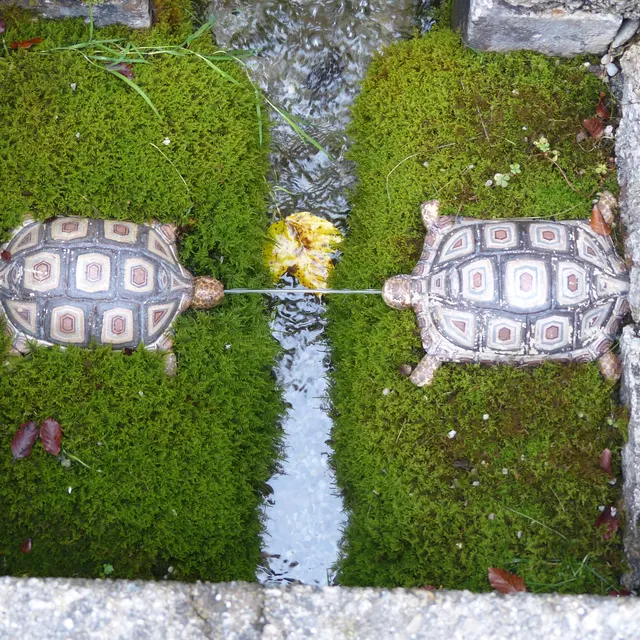
    Two stone turtles squirting water across a mossy channel at Hellbrunn
    The turtles
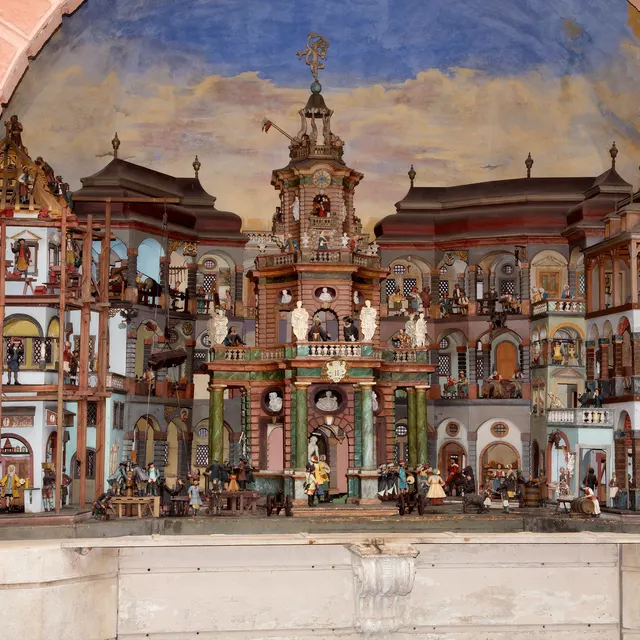
    The water-driven mechanical theatre at Hellbrunn with its miniature town of moving figures
    The mechanical theatre
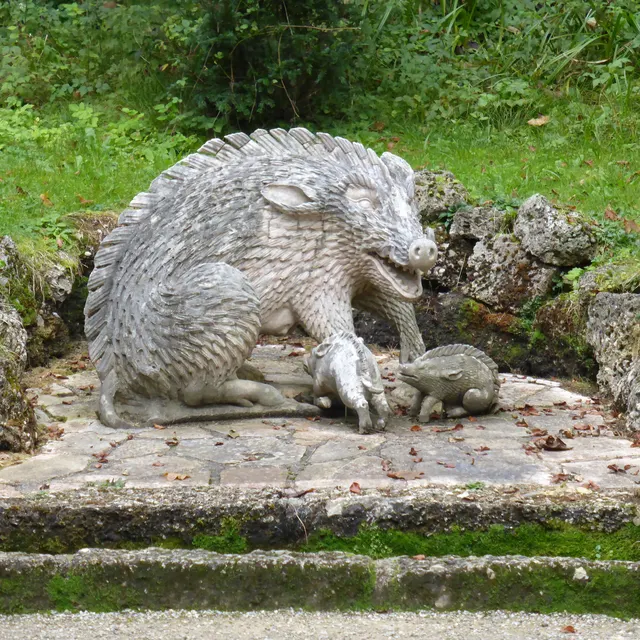
    Stone boar sculpture in the Hellbrunn water gardens
    The boar
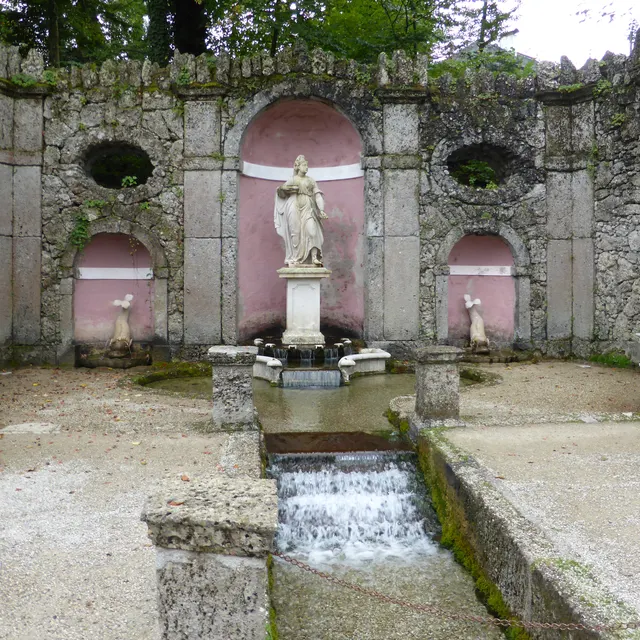
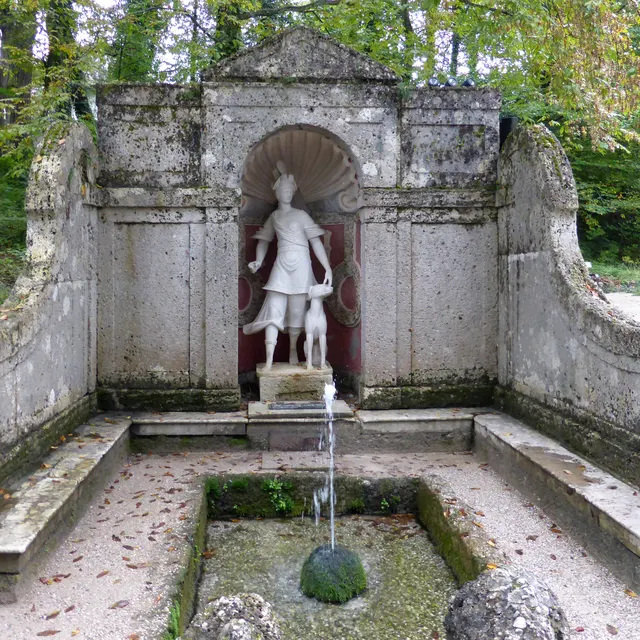
    A statue in a stone niche fountain on the Hellbrunn tour
    A niche on the tour
    • Trick Fountains tourThe 50-minute audio-guided walk through the water games
    • Palace Exhibition“GrandDelight” inside the villa Markus Sittikus built for pleasure
    • Folklore MuseumThe Monatsschlössl hilltop pavilion and its Salzburg collection

    Visitor guide

    Programme of the water games

    Nineteen acts, in the order a first visit meets them. Tap an act to read it.

    Everything an international visitor needs to plan a visit to Hellbrunn Palace and its famous trick fountains on the southern edge of Salzburg — what the palace is, how the 400-year-old water games work, what your ticket covers, where to find the Sound of Music gazebo, how to get there, and how the timed tickets are booked.

    1. Act IA palace built for pleasure, not for sleepingHellbrunn is unlike almost any other palace you will visit, because it was never meant to be lived in.

      Hellbrunn is unlike almost any other palace you will visit, because it was never meant to be lived in. When Prince-Archbishop Markus Sittikus von Hohenems had it built between 1613 and 1619 on the southern edge of Salzburg, he built a villa purely for daytime pleasure — banquets, music, conversation and, above all, mischief. Famously, there is not a single bedroom in the entire palace; guests came for the day and returned to the city by nightfall.

      That single fact sets the tone for everything at Hellbrunn. This is an early-Baroque pleasure palace designed to delight and to surprise, and four centuries later it still does exactly that. As an independent concierge service we are not the palace or its operator, but we help international visitors book a timed ticket for the day and hour they want, so you can simply arrive and enjoy the surprises Markus Sittikus built for his own guests.

    2. Act IIThe 400-year-old trick fountainsThe heart of a visit is the Wasserspiele, the trick fountains.

      The heart of a visit is the Wasserspiele, the trick fountains. Hidden water jets are built into the stone dining table, the garden benches, the grottoes and the paths, and they spring to life exactly where visitors least expect them — the same practical jokes the prince-archbishop played on his dinner guests four hundred years ago. Remarkably, the water games still run without a single electric pump, driven entirely by natural spring pressure fed by gravity from the hillside above the gardens — the only fully preserved Renaissance water garden in Europe still working this way.

      Along the way is one of Hellbrunn's great treasures: a water-powered mechanical theatre depicting a whole moving town of over a hundred figures, driven entirely by water. The roughly fifty-minute guided walk through the water games is where everyone, sooner or later, gets caught out — so dress for a little water on warm days, because getting gently splashed is the whole point.

    3. Act IIIWhat your ticket covers — three experiencesOne ticket covers three distinct experiences at Hellbrunn.

      One ticket covers three distinct experiences at Hellbrunn. First are the trick fountains themselves, seen on the guided audio walk. Second is the pleasure palace, whose “GrandDelight” exhibition in the Schöne Galerie tells the story of the villa Markus Sittikus built for entertainment — the one with no bedrooms at all. Third is the Monatsschlössl, the little hilltop pavilion above the gardens, which houses the Salzburg Folklore Museum and rewards a short climb with views back over the grounds.

      The self-guided fountains and palace exhibition are supported by a mobile audio guide offered in fourteen languages, so international visitors can follow the story in their own language. Allow around two hours to see all three parts of the site comfortably.

    4. Act IVThe Sound of Music gazeboThe glass gazebo from The Sound of Music — the pavilion from “Sixteen Going on Seventeen” — now stands in the Hellbrunn gardens, which makes the palace a natural two-in-one stop for film fans and fountain-lovers alike.

      The glass gazebo from The Sound of Music — the pavilion from “Sixteen Going on Seventeen” — now stands in the Hellbrunn gardens, which makes the palace a natural two-in-one stop for film fans and fountain-lovers alike. The gardens are free to enter, so you can see and photograph the gazebo whether or not you take a fountains ticket.

      The gazebo is generally kept locked, but you can walk right up to it. Many visitors come for the gazebo and stay for the trick fountains; pairing the two with the palace exhibition makes an easy, memorable half-day just outside the city.

    5. Act VGetting to Hellbrunn from SalzburgHellbrunn lies about four kilometres south of Salzburg's old town and is an easy trip by public transport.

      Hellbrunn lies about four kilometres south of Salzburg's old town and is an easy trip by public transport. City bus 25 is the direct route, running from Salzburg's main station (Hauptbahnhof) through the centre (Rathaus) to the Hellbrunn stop right by the entrance, a journey of roughly fifteen to twenty minutes.

      If you prefer to drive, it is about fifteen minutes south of the centre with parking near the gates. For a more scenic approach, the straight, tree-lined Hellbrunner Allee is a classic Salzburg walk or cycle down to the palace, taking a leisurely hour on foot. We send clear plain-language directions with your confirmation so the journey is one less thing to work out on the day.

    6. Act VIUnderstanding the timed ticketsHellbrunn admits visitors to the trick fountains on timed entry slots, especially in the busy summer months, so you choose a date and an entry time when you book rather than simply turning up.

      Hellbrunn admits visitors to the trick fountains on timed entry slots, especially in the busy summer months, so you choose a date and an entry time when you book rather than simply turning up. There is an adult ticket, a discounted child ticket for ages four to eighteen, and a family ticket covering two adults and one child with more children addable at checkout; children under four enter free and need no ticket.

      Because popular afternoons fill early in high season, having your slot confirmed in advance means you walk straight in at your chosen time instead of waiting for the next available tour. We reserve that exact slot for you and deliver the official timed ticket by email; we publish prices in your own currency with our service fee included, and we do not list the operator's official pricing or claim to be its ticket office.

    7. Act VIIVisiting with childrenMost palaces ask children to keep quiet and not touch.

      Most palaces ask children to keep quiet and not touch. Hellbrunn does the opposite — it sprays them. The hidden water jets turn a garden walk into a game of dodge-the-spray, and children spend the whole tour trying to guess where the next soaking will come from, usually guessing wrong. It is one of Salzburg's most genuinely family-friendly outings.

      Under-fours go free; ages four to eighteen use the child ticket; and the family ticket bundles two adults and a child onto one slot, with more children added at checkout. Bring a change of top for little ones on hot days and shoes that cope with cobbles and a little water, and there is plenty of free garden to run around in afterwards.

    8. Act VIIIThe best time to visitHellbrunn comes alive only for part of the year: the trick fountains run daily from late March to 1 November and then close for winter, so if you are in Salzburg outside that window the gardens may be open but the water games will not be flowing.

      Hellbrunn comes alive only for part of the year: the trick fountains run daily from late March to 1 November and then close for winter, so if you are in Salzburg outside that window the gardens may be open but the water games will not be flowing. Within the season, May, June and September pair warm days with lighter crowds, while July and August are hottest — ideal for getting playfully soaked — but also the busiest, when booking a timed slot matters most.

      Late morning and early afternoon give the fullest experience with the sun high over the water; in high summer the site keeps admitting into the early evening, a quieter option in golden light. The fountains are an outdoor, warm-weather pleasure, so a bright day is far better than a wet one — though you will get splashed either way.

    9. Act IXPlanning Hellbrunn into your Salzburg tripHellbrunn pairs naturally with a stay in Salzburg and works best as a half-day rather than a full outing.

      Hellbrunn pairs naturally with a stay in Salzburg and works best as a half-day rather than a full outing. A common rhythm is the fountains and palace in the late morning or early afternoon, then the free gardens and the Sound of Music gazebo at your own pace, with bus 25 keeping the logistics light in both directions.

      Because summer slots fill early, the sensible approach is to pin down your timed fountains ticket first and let the rest of your Salzburg day flex around it. As an independent booking-assistance service we handle that anchoring step for you, holding the slot on your chosen date and sending clear joining notes, so the visit slots cleanly into your trip rather than dictating it.

    10. Act XWho was Markus Sittikus, and why build a palace to soak people?Hellbrunn is inseparable from the man who dreamed it up.

      Hellbrunn is inseparable from the man who dreamed it up. Markus Sittikus von Hohenems became Prince-Archbishop of Salzburg in 1612 and, within a year, set about building himself a country villa on the plain south of the city. Between 1613 and 1619 he created not a fortress or a residence but a stage for pleasure — a place to entertain, impress and, characteristically, tease his guests. Contemporaries described him as a man of keen humour, and it shows in every corner of the estate. Rather than fill it with the usual displays of piety and power, he poured his imagination into hidden water jets, grottoes and mechanical marvels, turning a quiet garden into an elaborate practical joke his visitors would remember for the rest of their lives.

      Why go to such trouble? For a Baroque prince, a garden like this was a display of wealth, taste and technical mastery as much as a source of fun. Directing spring water through concealed pipes to make statues spray and benches soak took real engineering, and showing it off flattered the host as cleverly as it startled the guest. Markus Sittikus clearly enjoyed the theatre of it — welcoming dignitaries to a fine open-air meal, then watching their composure dissolve as the fountains sprang up around them. Four centuries later the joke still lands, and the palace remains exactly what he intended it to be: a place designed purely to delight and to surprise.

    11. Act XIWhere did the prince soak his dinner guests?The single most famous spot at Hellbrunn is the prince's outdoor dining table, a long stone table ringed by stone seats in a shaded courtyard.

      The single most famous spot at Hellbrunn is the prince's outdoor dining table, a long stone table ringed by stone seats in a shaded courtyard. Here Markus Sittikus would seat his guests for an open-air banquet — and here, at a signal, water would jet up through the seats and soak everyone at once. The trick is delicious in its detail: there is one place at the table that never gets wet, and that, of course, was the seat reserved for the archbishop himself, who could watch his drenched guests in perfect comfort. It is the purest expression of Hellbrunn's humour, a four-hundred-year-old prank that still catches modern visitors exactly as it caught the prince's dinner companions.

      This stone table is usually one of the first surprises on the fountains tour, and it sets the tone for everything that follows. Guides play the same game the prince did, waiting until visitors are comfortably seated before releasing the jets, so it pays to be a good sport and expect a splash. The etiquette of the original banquets is part of the fun of the story: guests were expected to stay seated and keep smiling however wet they became, since rising from the table before the host would have been unthinkable. Today you are free to laugh and leap up whenever you like.

    12. Act XIIWhat is the water-powered mechanical theatre?One of Hellbrunn's most extraordinary sights is the mechanical theatre, a miniature Baroque town brought to life entirely by water.

      One of Hellbrunn's most extraordinary sights is the mechanical theatre, a miniature Baroque town brought to life entirely by water. Added to the gardens around 1750, it contains roughly two hundred small figures — craftspeople, tradespeople and townsfolk — going about their daily work while a barrel organ plays, the whole scene powered by nothing more than flowing water. Butchers, potters, dancers and builders move in endless loops, a snapshot of eighteenth-century life rendered in painted wood and clockwork ingenuity. It is a reminder that Hellbrunn was a showcase of the era's most advanced hydraulic technology, not merely a garden of pranks, and it remains one of the highlights visitors remember long after their clothes have dried.

      The mechanical theatre sits along the route of the trick-fountains walk, so you will pass it as part of your visit rather than needing to seek it out separately. Take a moment to watch it run through its cycle — the charm is in the detail, from the tiny tools to the rhythm of the little figures at work. Because it is driven by the same natural water pressure that feeds the fountains, it is a working piece of history rather than a modern reconstruction, and it captures perfectly the blend of playfulness and engineering that defines the whole estate.

    13. Act XIIIWhat is there to see inside the palace itself?Beyond the water games, the pleasure palace itself is well worth stepping inside.

      Beyond the water games, the pleasure palace itself is well worth stepping inside. The villa Markus Sittikus built is an early-Baroque interior of frescoed halls and richly decorated rooms, designed for banqueting, music and conversation rather than sleeping — famously, there is not a single bedroom in the building. The palace now hosts an exhibition, presented under the name “GrandDelight”, which tells the story of the villa, its playful creator and the age of pleasure gardens it belongs to. It gives context to everything you see outside, explaining how and why a prince-archbishop came to spend a fortune on soaking his own guests, and it is included in the same ticket as the fountains and the folk museum.

      Because the fountains understandably steal the show, some visitors skip the interior, but it rewards the short detour — especially on a hot afternoon, when the cool frescoed rooms make a pleasant contrast to the sunlit gardens. Allow twenty minutes or so to walk through the exhibition at an easy pace. The self-guided route is supported by the same mobile audio guide used for the fountains, so international visitors can follow the story in their own language. Seeing the palace and the water games together gives you the full picture of what Hellbrunn was built to be.

    14. Act XIVWhat can you see in the park and grounds?Hellbrunn is set within a large, generous park, and the grounds are free to enter whether or not you take a fountains ticket.

      Hellbrunn is set within a large, generous park, and the grounds are free to enter whether or not you take a fountains ticket. Tree-lined avenues, formal gardens, ponds and open lawns spread out around the palace, making it a favourite spot for local families and picnickers as well as visitors. Tucked into the grounds is a stone theatre carved into the rock face, an atmospheric open-air stage that once hosted courtly performances, and paths wind up the hillside to the little Monatsschlössl pavilion above. It is the kind of place where you can easily spend an hour simply strolling, quite apart from the ticketed attractions, and it makes a relaxed counterpoint to the busier streets of central Salzburg.

      The park also gives Hellbrunn its unhurried, half-day rhythm. Many visitors do the fountains and palace first, then wander the free gardens afterwards, finding the Sound of Music gazebo and letting children run off the last of their energy on the lawns. Benches and shady spots make it easy to pause, and the gardens stay open well beyond the fountains' hours, so there is no rush to leave once your tour is done. Bring a picnic on a fine day and the grounds turn a ticketed visit into a leisurely afternoon out.

    15. Act XVIs the trick-fountain tour guided, and how long does it take?The trick-fountains experience is a walking tour of the water gardens that takes around fifty minutes from start to finish.

      The trick-fountains experience is a walking tour of the water gardens that takes around fifty minutes from start to finish. Groups move through the grottoes, past the stone dining table, the mechanical theatre and the various hidden jets, with the water games set off along the way — which is, of course, where the soakings happen. The pace is gentle and the route is not long, but it is the timed, guided nature of the walk that makes booking a slot worthwhile, since everyone enters in scheduled groups rather than drifting through at will. A mobile audio guide accompanies the walk, so you can follow the history and the jokes in your own language.

      Because the fountains run on timed entry, particularly in the busy summer months, the smart approach is to have your slot confirmed before you arrive rather than hoping for space on the next departure. Once inside, plan on roughly two hours in total to add the palace exhibition and the hilltop folk museum to the fifty-minute fountains walk. The wider gardens, by contrast, are free and unstructured, so you can linger there for as long as you like once the guided part of your visit is done, at whatever pace suits your group.

    16. Act XVIWhat should you wear and bring to the trick fountains?The golden rule at Hellbrunn is simple: you will get wet, so dress for it.

      The golden rule at Hellbrunn is simple: you will get wet, so dress for it. The trick fountains are designed to spray visitors from the benches, paths and grottoes, and while the soaking is gentle and playful rather than drenching, most people come away with a few damp patches at least. On a warm summer day this is a delight and dries off quickly; earlier in spring or later in autumn, a light waterproof or a change of top is a sensible thing to pack, especially for children. Comfortable shoes that cope with cobbles, stone and the odd puddle will serve you far better than sandals or anything you would rather keep dry.

      Beyond clothing, treat Hellbrunn as an outdoor half-day. Sun protection is worth having in high summer, when much of the fountains route is open to the sky, and a small bag for a wet layer keeps the rest of your things dry. There is no need for anything elaborate — the site is an easy, family-friendly walk rather than a hike — but the visitors who enjoy it most are the ones who arrive expecting to be splashed and dressed accordingly. If you would rather stay dry, hang back from the benches and grottoes whenever the jets are running.

    17. Act XVIIHow accessible is Hellbrunn for wheelchairs, prams and limited mobility?Much of Hellbrunn is easier to reach than a first glance at an old palace might suggest.

      Much of Hellbrunn is easier to reach than a first glance at an old palace might suggest. The gardens and the greater part of the trick-fountains route run on level paths and cobbles, making them broadly manageable for wheelchair users and for families with prams, though the surfaces are historic and some of the grottoes are narrow and tight. The palace exhibition sits within the villa, while the folklore museum occupies the Monatsschlössl on the hillside above the gardens, reached by a short uphill walk that is the least accessible part of the site. For anyone with specific mobility needs, it is worth checking the current arrangements with the attraction directly before you travel.

      As an independent concierge service we are glad to pass on what we know and to flag any parts of a visit that may be difficult, but the operator is the authority on step-free routes, adapted facilities and any assistance available on the day. If accessibility is a priority for your group, let us know when you book and we can point you to the official contact and help you choose a date and time that suits, so you can plan the visit with confidence rather than guesswork.

    18. Act XVIIIWhat can you combine with a visit to Hellbrunn?Hellbrunn sits right beside Salzburg Zoo, which shares the same green pocket of parkland on the southern edge of the city, so the two make a natural pairing for a family day out.

      Hellbrunn sits right beside Salzburg Zoo, which shares the same green pocket of parkland on the southern edge of the city, so the two make a natural pairing for a family day out. Children who love the trick fountains often have plenty of energy left for the animals, and the short distance between the two means you can combine them without a long journey in between. The tree-lined Hellbrunner Allee, a classic Salzburg walking and cycling route, runs down to the palace from the direction of the city, adding a pleasant approach on foot for anyone who would rather arrive the scenic way.

      Because Hellbrunn is only about fifteen minutes south of the old town on bus 25, it also slots easily into a broader Salzburg itinerary. A common plan is to spend the morning among the city's landmarks — the fortress, the cathedral and the Mozart sights — and give the afternoon to Hellbrunn's gardens, fountains and the Sound of Music gazebo. The palace works best as a relaxed half-day rather than a rushed hour, so pairing it with either the zoo next door or a morning in the city centre tends to make the most of the trip out.

    19. Act XIXCan you take photographs at Hellbrunn?Photography is welcome throughout the gardens and around the trick fountains, and there is plenty to capture — the leaping water jets, the grottoes, the formal avenues and the reflections in the ponds all reward a camera or a phone.

      Photography is welcome throughout the gardens and around the trick fountains, and there is plenty to capture — the leaping water jets, the grottoes, the formal avenues and the reflections in the ponds all reward a camera or a phone. The one practical caution is the water itself: the fountains spray without much warning, so keep your equipment protected and be ready to shield a lens when the jets go off near you. The play of sunlight through the water on a bright day is what most visitors want to photograph, which is another reason a clear afternoon tends to beat an overcast one for pictures.

      The Sound of Music gazebo is one of the most photographed spots on the whole estate and, because the gardens are free to enter, you can walk right up to it for a picture with or without a fountains ticket. The pavilion is generally kept locked, so photographs are taken from outside, but its glass panes and garden setting make it an easy favourite. Elsewhere, the hilltop by the Monatsschlössl gives a wider view back across the grounds, a good vantage point for framing the palace and gardens together.

    Practical

    The gazebo panes

    Opening hours

    Open daily from late March to 1 November. Trick fountains run from 9:30am; last admission is late afternoon in spring and autumn (around 4:30pm) and early evening in July and August (around 6pm). The palace and gardens are closed over winter.

    Address

    Schloss Hellbrunn, Fürstenweg 37, 5020 Salzburg, Austria.

    Getting there

    About 15 minutes south of Salzburg's old town. City bus 25 runs from the main station (Hauptbahnhof) and Rathaus straight to the Hellbrunn stop; by car there is parking at the gates.

    Time needed

    Allow around two hours to see the trick fountains, the palace exhibition and the folk museum. Add more if you want to wander the free gardens and find the Sound of Music gazebo.

    Fitness restrictions

    The fountain tour is an easy outdoor walk on paths and cobbles. You will get splashed — that is the point — so dress for a little water on warm days.

    Accessibility

    The gardens and most of the fountain route are step-free, though some grottoes are tight. The hilltop Monatsschlössl folk museum sits above the gardens on a short climb.

    Photography

    Photography is welcome throughout the gardens and fountains. The gazebo in the park can be seen for free at any time.

    Guides

    Up the hill to the Monatsschlössl

    Included with every ticketYour Hellbrunn 5-minute guideTap the Germaul · Five minutes, before you go

    Before you go, here's what makes Hellbrunn unlike any other palace in Salzburg — in five minutes.

    • Why a prince-archbishop built a grand villa with no bedrooms at all
    • How 400-year-old hidden jets still soak visitors on the original water pressure
    • What the “GrandDelight” palace exhibition and the hilltop folk museum add to your visit
    • Where to find the Sound of Music gazebo in the free gardens
    Sent by email with your tickets.

    Questions

    The rock pools

    What's included in the ticket?

    Every ticket covers all three Hellbrunn experiences: the Trick Fountains audio-guided tour, the Palace Exhibition “GrandDelight”, and the Folklore Museum in the Monatsschlössl. The mobile audio guide is available in 14 languages.

    Do I have to choose a time?

    Yes. Hellbrunn admits visitors on timed slots, especially in summer, so you pick a date and an entry time when you book. We reserve that exact slot for you.

    How and when do I get my tickets?

    We book your official timed tickets after payment and email them to you, usually within minutes and normally within 2 hours, always in good time for your visit date. You show them on your phone at the entrance.

    Are the trick fountains really going to get me wet?

    Almost certainly — that's the whole idea. Hidden jets are built into the benches, paths and grottoes. It's all in good fun and easy to dry off on a warm day, but dress accordingly.

    Is the Sound of Music gazebo here?

    Yes. The glass pavilion from “Sixteen Going on Seventeen” stands in the Hellbrunn gardens. The gardens are free to walk, so you can visit the gazebo with or without a fountains ticket.

    Do young children need a ticket?

    Children under 4 enter free and need no ticket. Children aged 4 to 18 use the discounted child ticket. The family ticket covers two adults and one child, with more children addable at checkout.

    How long should I plan for?

    About two hours covers the fountains, the palace exhibition and the folk museum. Leave extra time if you'd like to explore the wider gardens and the Sound of Music gazebo.

    How do I get to Hellbrunn from Salzburg?

    It's around 15 minutes south of the old town. City bus 25 runs there directly from the main station and the Rathaus, stopping right by the entrance. There's also parking if you drive.

    When is Hellbrunn open?

    The trick fountains run daily from late March to 1 November. They open at 9:30am, with last admission in the late afternoon in spring and autumn and early evening in high summer. The site closes for winter.

    Can I change my date after booking?

    Yes. Tickets can be rebooked to another date within the season — just contact our concierge team and we'll move your slot.

    Can I get a refund?

    All sales are final once your timed tickets are secured. If the attraction cancels or fails to honour a booking on its side, we refund you in full.

    Is the site accessible for wheelchairs or prams?

    The gardens and most of the fountain route are step-free, though a few grottoes are narrow. The folk museum sits on a short hill above the gardens.

    Is there a student or senior ticket?

    Online we offer adult, child (4–18) and family tickets. Reduced student rates are handled at the palace on the day with valid ID; message us if you'd like advice on the best option for your group.

    What language is the tour in?

    The fountains and palace exhibition are self-guided with a mobile audio guide, offered in 14 languages including English, German, Italian, Spanish, French, Japanese and Chinese.

    Do you charge more than the palace?

    We charge a service fee for booking, delivering and supporting your timed tickets so you don't have to navigate the official system yourself. You're paying for the concierge service and the certainty of your slot.

    Who are you — are you the palace?

    No. We're an independent ticket-concierge service. We secure official timed-entry tickets on your behalf and deliver them by email. We're not affiliated with Schloss Hellbrunn or its operator.

    Deeper pools

    What is Hellbrunn Palace?

    Hellbrunn is an early-Baroque pleasure palace on the southern edge of Salzburg, Austria, built between 1613 and 1619 for Prince-Archbishop Markus Sittikus von Hohenems. It was designed purely for daytime entertainment and famously contains no bedrooms at all. Its greatest attraction is the Wasserspiele, or trick fountains: hidden water jets set into the stone tables, benches, paths and grottoes that still spring to life on their original 400-year-old water pressure, soaking guests exactly where they least expect it. A visit also takes in the pleasure palace itself, a water-powered mechanical theatre, and the Monatsschlössl folk museum on the hill above the gardens.

    What is included in a Hellbrunn ticket?

    A ticket covers three experiences: the guided trick-fountains walk, the “GrandDelight” palace exhibition inside the pleasure villa, and the Monatsschlössl folk museum on the hilltop above the gardens. A mobile audio guide is available in fourteen languages. Allow around two hours to see all three at a comfortable pace. The wider gardens, which include the Sound of Music gazebo, are free to walk with or without a fountains ticket.

    Do I have to choose an entry time?

    Yes. Hellbrunn admits visitors to the trick fountains on timed slots, particularly in the busy summer months, so you pick a date and an entry time when you book. Reserving that exact slot in advance means you walk straight in at your chosen time rather than queue for the next available tour, which matters most on popular summer afternoons when slots fill early.

    Will the trick fountains really get me wet?

    Almost certainly — that is the whole idea. Hidden jets are built into the stone dining table, the benches, the paths and the grottoes, and the guides set them off where you least expect them, just as the prince-archbishop did to his own dinner guests four centuries ago. It is gentle and playful rather than drenching, and easy to dry off on a warm day, but it is wise to dress for a little water.

    Is the Sound of Music gazebo at Hellbrunn?

    Yes. The glass gazebo from “Sixteen Going on Seventeen” now stands in the Hellbrunn gardens. The gardens are free to enter, so you can see and photograph the gazebo with or without a fountains ticket. It is generally kept locked, but you can walk right up to it, which makes Hellbrunn a natural two-in-one stop for film fans and fountain-lovers alike.

    Who built Hellbrunn Palace and why?

    Hellbrunn was built between 1613 and 1619 by Markus Sittikus von Hohenems, the Prince-Archbishop of Salzburg, as a country villa purely for daytime pleasure — banqueting, music and, above all, playing tricks on his guests. A man of famously keen humour, he filled the gardens with hidden water jets to surprise the dignitaries he entertained. Tellingly, the palace has no bedroom at all: guests came for the day and returned to the city by evening. Four centuries on, his elaborate practical joke still works exactly as intended.

    How do the trick fountains work without electric pumps?

    The Wasserspiele are driven entirely by natural water pressure, not electric pumps. Spring water is channelled downhill by gravity from higher ground and directed through concealed pipes, so that opening a valve sends jets bursting from benches, statues, grottoes and the famous stone table. The same principle powers the water-driven mechanical theatre. Because the system has been preserved and maintained for over four hundred years, the fountains you see are essentially the original Renaissance engineering still doing the job Markus Sittikus designed it for.

    What is the water-powered mechanical theatre?

    The mechanical theatre is a miniature Baroque town, added to the gardens around 1750, in which roughly two hundred small figures go about their trades while a barrel organ plays — all powered by flowing water rather than electricity. Craftspeople, dancers and townsfolk move through their routines in a charming snapshot of eighteenth-century life. It stands on the route of the trick-fountains walk, so you pass it as part of your visit, and it is one of the details visitors remember most from Hellbrunn.

    How long does the trick-fountains tour take, and is it guided?

    The trick-fountains walk is a guided tour of roughly fifty minutes, with visitors entering in timed groups and the water games set off along the way. A mobile audio guide accompanies the route so you can follow the history and the jokes in your own language. To see everything — the fountains, the “GrandDelight” palace exhibition and the hilltop folk museum — allow around two hours in total. The free gardens can then be explored at whatever pace you like afterwards.

    What should I wear to Hellbrunn?

    Dress expecting to get a little wet, because the trick fountains are designed to spray visitors and most people come away with a few damp patches. On a warm day this dries quickly and is part of the fun; in spring or autumn, pack a light waterproof or a spare top, especially for children. Comfortable shoes that handle cobbles, stone and the odd puddle are ideal, and a small bag keeps your dry things separate.

    Is Hellbrunn accessible for wheelchairs and prams?

    The gardens and most of the trick-fountains route run on level paths and cobbles and are broadly manageable for wheelchairs and prams, though the surfaces are historic and some grottoes are narrow. The folklore museum in the hilltop Monatsschlössl involves a short uphill walk and is the least accessible part of the site. The operator is the authority on step-free routes and any assistance on the day, so if accessibility matters to your group, tell us when you book and we will point you to the official contact.

    Can I visit the gardens without a ticket?

    Yes. The wider Hellbrunn park and gardens are free to enter, so you can stroll the avenues, find the Sound of Music gazebo and enjoy the grounds without buying anything. A ticket is needed only for the timed trick-fountains tour, the “GrandDelight” palace exhibition and the folklore museum. Many visitors combine a paid fountains slot with time spent freely wandering the surrounding park before or afterwards.

    What languages is the audio guide in?

    The self-guided fountains and palace exhibition are supported by a mobile audio guide offered in a wide range of languages — commonly cited as around fourteen, including English, German, Italian, Spanish, French, Japanese and Chinese — so international visitors can follow the story in their own language. If a specific language matters to your group, let us know and we can confirm the current options before you visit.

    Can I combine Hellbrunn with Salzburg Zoo?

    Yes — Salzburg Zoo sits directly beside Hellbrunn in the same stretch of parkland on the southern edge of the city, making the two an easy pairing for a family day. Children who enjoy dodging the trick fountains often still have energy for the animals next door, and the short distance means you can do both without a long trip between them. Bus 25 serves the area from central Salzburg.

    Can I take photographs at Hellbrunn?

    Yes, photography is welcome throughout the gardens and around the trick fountains. The one thing to watch is the water — the jets spray without much warning, so protect your camera or phone near the benches and grottoes. The Sound of Music gazebo, in the free gardens, is a favourite subject and can be photographed from outside, as it is generally kept locked. Bright days give the best light on the water.

    What are Hellbrunn's opening hours?

    The trick fountains open daily at 9:30am throughout the season. Closing and last-admission times shift with the month: in spring and autumn the last tours are in the late afternoon, while in July and August the site keeps admitting into the early evening. The surrounding gardens stay open much longer, from early morning until night. Because the exact times change through the season, we confirm the hours for your chosen date when we book your slot, so you always have the current schedule for the day you visit.

    Is Hellbrunn worth visiting on a rainy day?

    The trick fountains still run in the rain, and since you are going to get splashed anyway, a little extra water is no disaster. That said, so much of the experience is outdoors — the gardens, the walk, the mechanical theatre — that a bright day is far more enjoyable. If your dates allow flexibility, choosing a fair afternoon makes for the best visit, and your booking can be moved within the season.

    How far in advance should I book?

    In the busy summer months, popular afternoon slots can fill several days ahead, so booking as soon as your Salzburg dates are settled is the safest approach. Outside high season there is usually more flexibility, but reserving in advance still means you walk straight in at your chosen time rather than waiting for the next available tour. We confirm your exact slot once you book and send it by email before your visit.

    Can I change my date after I have booked?

    Yes. Tickets can be rebooked to another date within the operating season — simply contact our concierge team and we will move your slot to a time that suits. This flexibility is useful when the weather turns or your Salzburg plans shift, since the trick fountains are far better enjoyed on a fair day. All sales are otherwise final once your timed tickets are secured.
    Sources: en.wikipedia.org Last reviewed: